
Between May 22–24, I spent three days at Bucharest’s Sala Palatului, in a room with hundreds of entrepreneurs and, more importantly, some fantastic speakers: Chris Do, Jack Delosa (who I’d never heard of before but who really impressed me), Codie Sanchez (who is absolutely fabulous in real life), and Vishen Lakhiani, founder of Mindvalley, whose talk felt more like a manifesto than a keynote.
There were plenty of other speakers too, but these are the ones that stuck with me and I wanted to share some of my favorite insights because I think we learn best from each other.
First, though, a quick observation—one that other people noticed too: We really don’t know how to ask questions. The speakers gave very clear instructions on how to ask a question, and yet… somehow we still struggled.
It was especially frustrating during Chris Do’s masterclass, and I think I know why. I’m not convinced I would have done much better myself (though I’d like to think so). So credit goes to everyone who had the courage and quick reflexes to make it to the microphone.
Do you remember Romanian literature classes? The ones where you were rewarded for repeating someone else’s literary analysis as accurately as possible? How often were you actually encouraged to express your own opinion? Or taught how to do it?
I vividly remember getting a 6 on a Romanian exam because I dared to include my own interpretation of Luceafărul and I’d add another factor: our growing dependence on AI, which can slowly chip away at our ability to think critically.
But I think the biggest reason is simpler: If you don’t really understand your problem, it’s hard to articulate it and I think it has little to do with intelligence or education. I struggle with this too and so do many of the entrepreneurs I work with.
To know what problem you have, you need to spend enough time with it to understand it. Most entrepreneurs don’t have that time, that habit, or that context. They’re isolated in their own bubble—either too busy to reflect or without people they can talk to.
That’s why events like FOMO matter, that’s why mastermind groups and entrepreneur communities matter. You need spaces where you can have real conversations, not just network.
Anyway, back to FOMO. I left with a notebook full of notes, and I want to share a few things that really resonated with me (maybe they’ll resonate with you too).
1. I’m glad we’re moving away from the idea that business should be Priority #1
Vishen from Mindvalley talked about how businesses have been built for years around American hustle culture and Jack Delosa repeatedly emphasized something different: you can live life by design.
In other words, you get to choose how you build. That message landed hard for me because for many years my philosophy was push harder, give everything you’ve got and results will follow. To be fair, it worked, a little too well I might add, but I no longer connect with that version of success. The whole toxic productivity, rise-and-grind mindset doesn’t appeal to me anymore.
Maybe it works when you’re 20 but at almost 40, my life is about something else.
I’d also add that your expectations around growth and income shape the way you build your business. While I don’t buy into the “just set an intention and the universe will provide” school of thought, I also don’t believe in working day and night anymore either.
Not worth it.
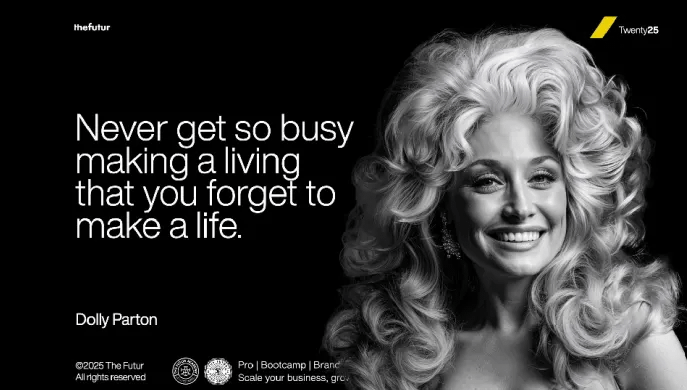
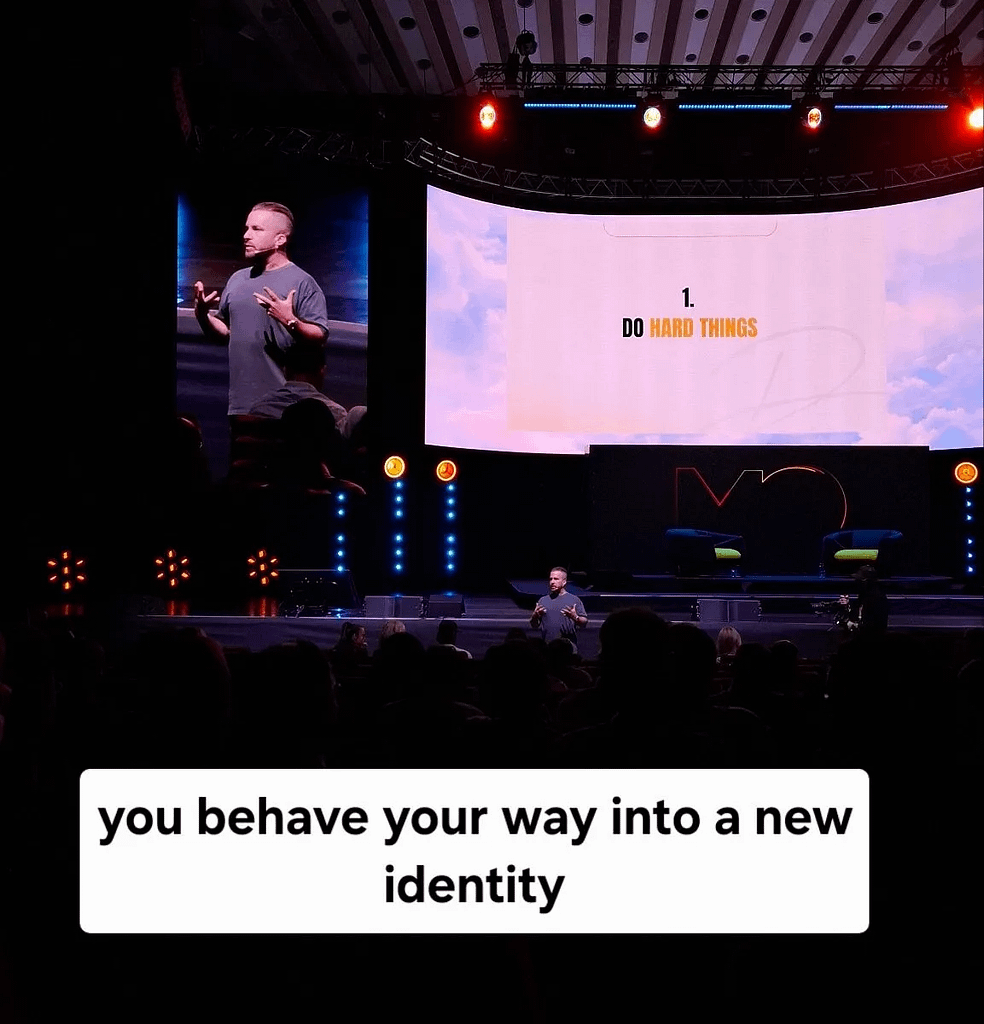
2. Do Hard Things
“But Monica, didn’t we just agree that we’re not supposed to die for our business?”
Yes, but doing hard things doesn’t necessarily mean working 12-hour days. Sometimes the hardest things are emotionally hard.
Let me explain.
I’ve worked with entrepreneurs who needed to validate a business idea which meant that beyond the strategic work—defining their audience, positioning, offer, transformation, pricing strategy, and so on—they needed real-world feedback.
And for many people, that means doing something uncomfortable: talking to people, asking for feedback, for referrals.
It feels hard because we attach so much emotion to rejection and criticism, so instead, we choose tasks that take longer but feel safer emotionally.
And here’s the interesting part: the thing you keep avoiding is usually the thing that would move your business forward the most: a conversation with a potential client, that strategy call, going to a networking event.
I have a simple rule I try to follow: If something scares me a little and it’s relevant to the business, it goes to the top of the list—not the bottom.
And just as important as the business result is what happens to you when you do the hard thing: you grow and when that happens your business grows with you.
3. Be Weird
Two different speakers said essentially the same thing when talking about visibility online, it makes perfect sense and yet it’s incredibly difficult to do.
As a marketer, I completely understand the concept. I follow plenty of personal brands specifically because they’re different from everyone else online, but as an entrepreneur trying to build a personal brand? This is much harder to envision.
I often get feedback that I look natural on camera and that visibility seems effortless for me, but trust me—it isn’t. It’s taken years of work to build the confidence required to show up that way and now I’m supposed to lean even harder into being my unique self online?
Part of me cringes at the idea, though there’s also a tiny voice in my head saying: “Yay. What a wonderful opportunity.”
Putting my personal rant aside, here’s one of Chris Do’s points that really stuck with me:
Be aesthetically discerning and he wasn’t talking about dressing elegantly or looking polished. He meant having something distinctive—something memorable. It could be a color, an accessory or some visual element that becomes unmistakably yours.
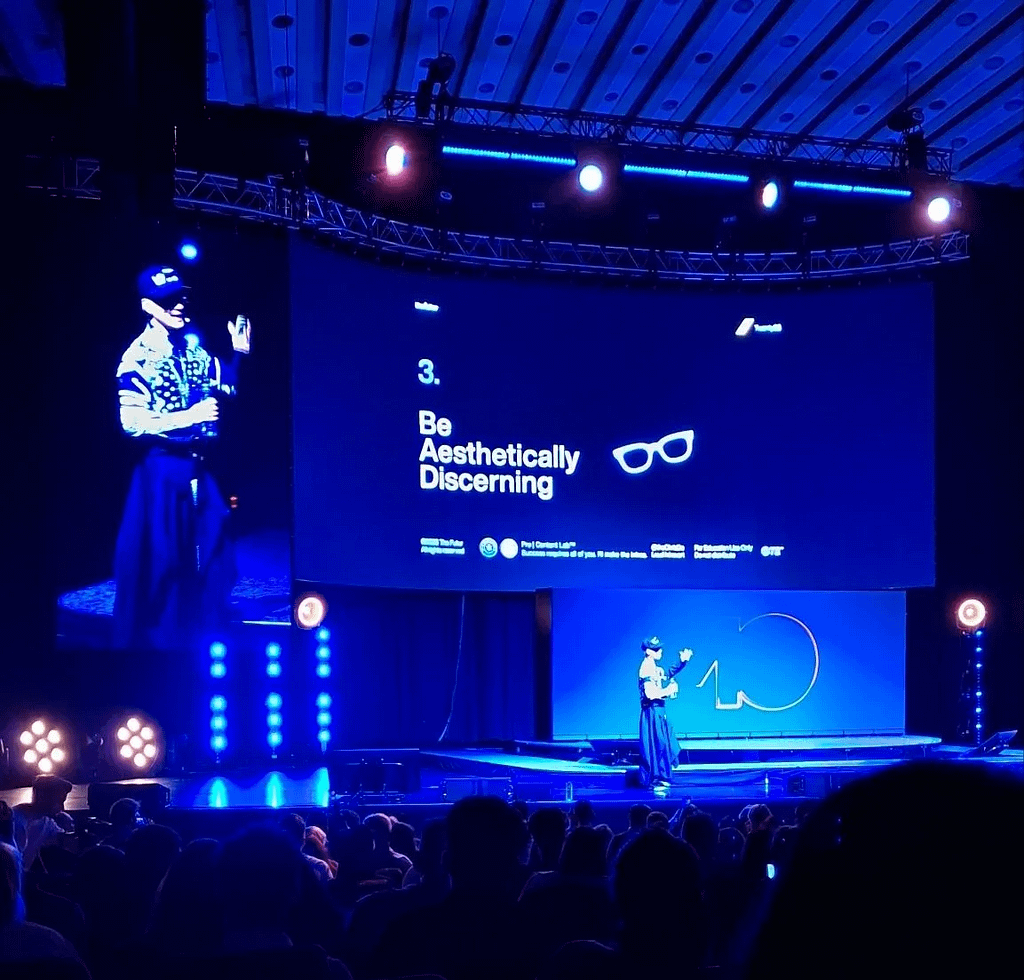
Then he introduced what he called the silhouette test: If someone only saw your silhouette, would they recognize you? Would they recognize your brand?
I love this test because it’s ruthless. Take away the face, name, logo and if there’s still something recognizable left, you have a brand. If there isn’t, you probably have a template borrowed from someone else.
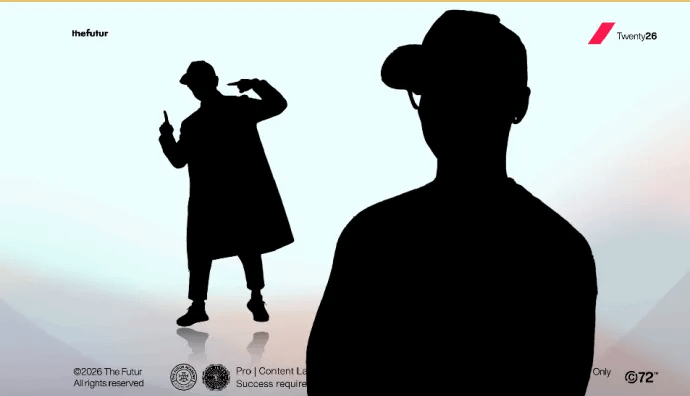
The good news is that “weird” doesn’t mean inventing a character or creating some gimmick and most of the time, the thing that makes you different is already there. You’ve just edited it out in an effort to look more professional.
Maybe it’s the way you explain things, that opinion you never share because you don’t want to upset people or an oddly specific obsession you think nobody else cares about.
That’s the stuff: Being weird isn’t about adding something strange, but about stopping yourself from removing what already makes you you.
4. Pick a Teacher and Do What They Say
I resisted this idea for years, but after spending a few hours watching Chris Do do his thing and hearing him repeat this advice, I realized two things.
First: This is exactly what I did when learning conversion copywriting and email copywriting. I consumed everything Joanna Wiebe—the original conversion copywriter—created about sales copy. Then I worked through specialized email copywriting programs from AWAI and Chris Orzechowski.
And it worked.
Second: When it comes to my own business, I’m still operating from an old pattern: If I can’t do it myself, then I’m not good enough, and if I’m not good enough, I don’t deserve help.
So I resisted the idea that following a guide might actually make things easier. I’m working on changing that.
As for who my teacher is going to be? No idea yet so recommendations are welcome.
5. You’ll Never Achieve More Than What You Believe Is Possible
Mindset, everything comes back to it and almost every speaker at FOMO said some version of the same thing:
If you don’t believe it’s possible, you won’t take action, and if you don’t take action, you won’t get the result, which then becomes proof that you were right all along.
This isn’t about positive thinking or motivational posters with kittens hanging from tree branches.

It’s much more practical than that.
If deep down you believe you don’t deserve high-paying clients, you won’t send that proposal and if you don’t send the proposal, you won’t get the client.
And then you tell yourself: “See? I knew it.”
Everything else in this journal entry connects back to this.
Doing hard things is difficult because part of me still believes rejection says something about my worth.
Being weird is difficult because I don’t fully trust that what makes me different is exactly what some people are looking for.
Picking a teacher took me years because I believed asking for help meant I wasn’t good enough.
At the end of the day, all of these challenges are really about my relationship with my own mind—not the algorithm, not the market, and not the client.
If you were at FOMO too, I’d love to hear what you took away from it, and if you weren’t there, which of these five ideas resonates most with you