

This past weekend, my inbox saw a small marketing parade. Between May 9 and May 11 (Mother’s Day weekend), I received 49 emails from creators, marketers, brands, and platforms. Only 9 of them even acknowledged the event that had the whole retail world buzzing.
And just like that, a powerful opportunity to create context-driven resonance was missed by over 80% of my subscriptions.
So let’s talk about contextual marketing + seasonal sales (and why most people overlook it).
The Power of Contextual Marketing
Contextual marketing uses what your audience is already thinking about — a cultural moment, seasonal theme, or emotional trigger — and meets them there.
Mother’s Day is a perfect example. Whether someone is buying gifts, grieving a loss, celebrating a win, or navigating complicated feelings, this day has emotional weight. And the inbox is a personal space. That emotional relevance can drive opens, clicks, and conversions, if used well.
Plus there is actual shopping intent.
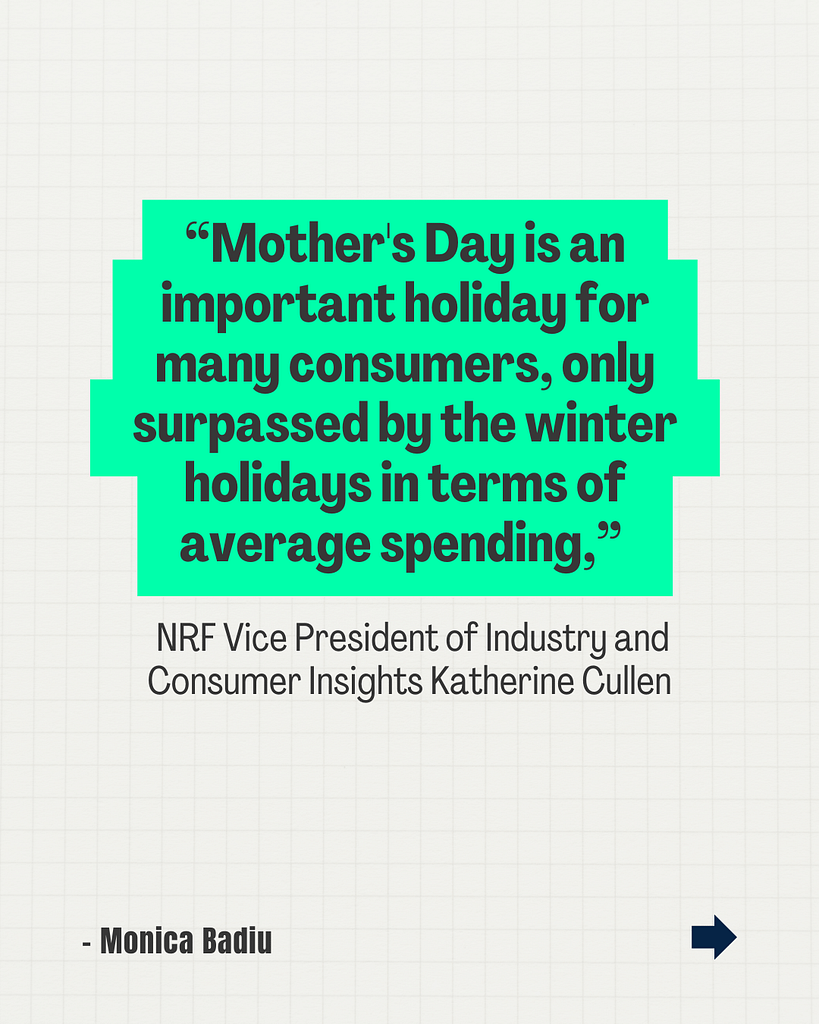
Consumer spending on Mother’s Day is expected to reach $34.1 billion this year, according to the annual survey released recently by the National Retail Federation (NRF) and Prosper Insights & Analytics. The amount is up from last year’s $33.5 billion and follows closely behind the record of $35.7 billion in 2023.
- Eighty-four percent of U.S. adults are expected to celebrate the holiday.
- On average, those celebrating plan to spend $259.04 on Mother’s Day gifts and celebrations, about $5 more than they budgeted in 2024.
- Those purchases will be taking place online (36 percent), department stores (32 percent), specialty stores (29 percent), and local or small businesses (25 percent).
But as my inbox showed, most marketers didn’t bother. Here’s what I found.
Email Volume
• May 9: 11 emails
• May 10: 24 emails
• May 11: 14 emails
Total: 49 emails
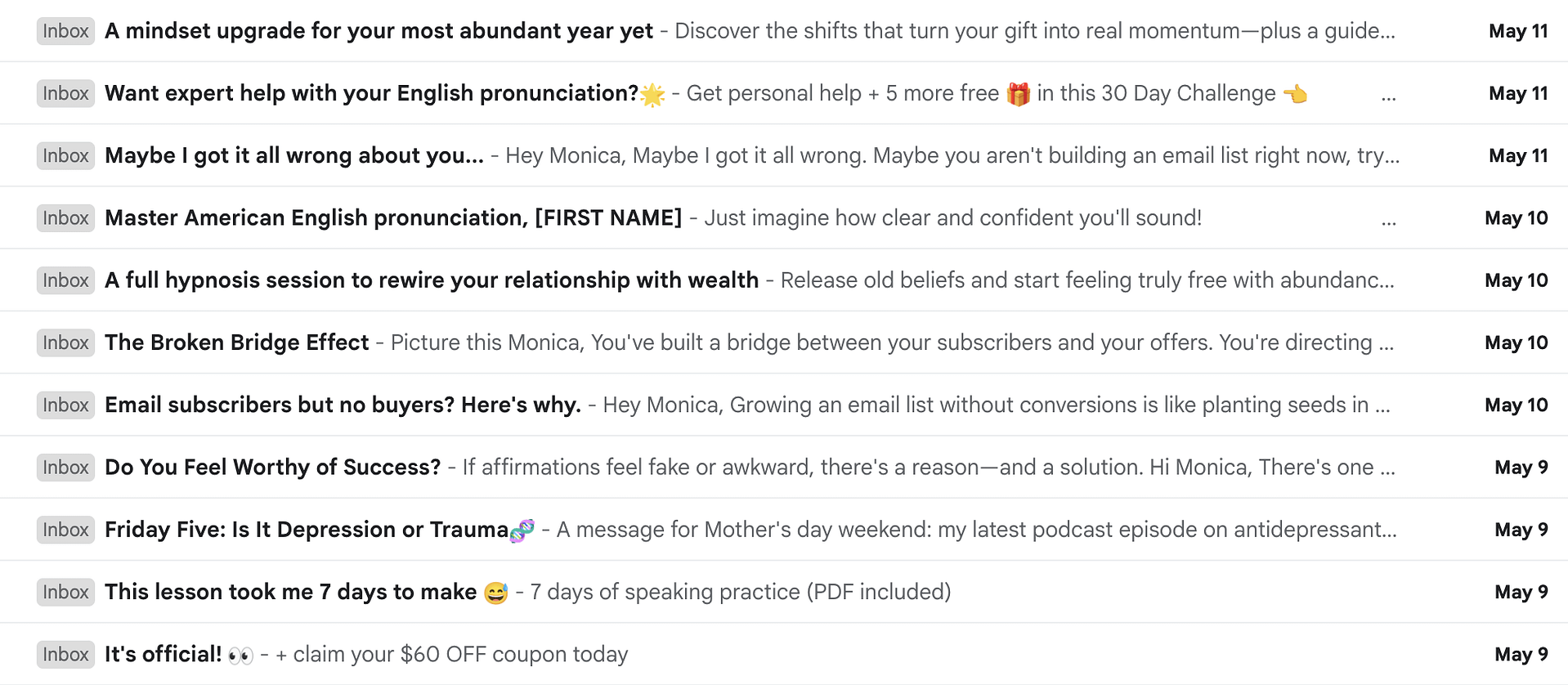
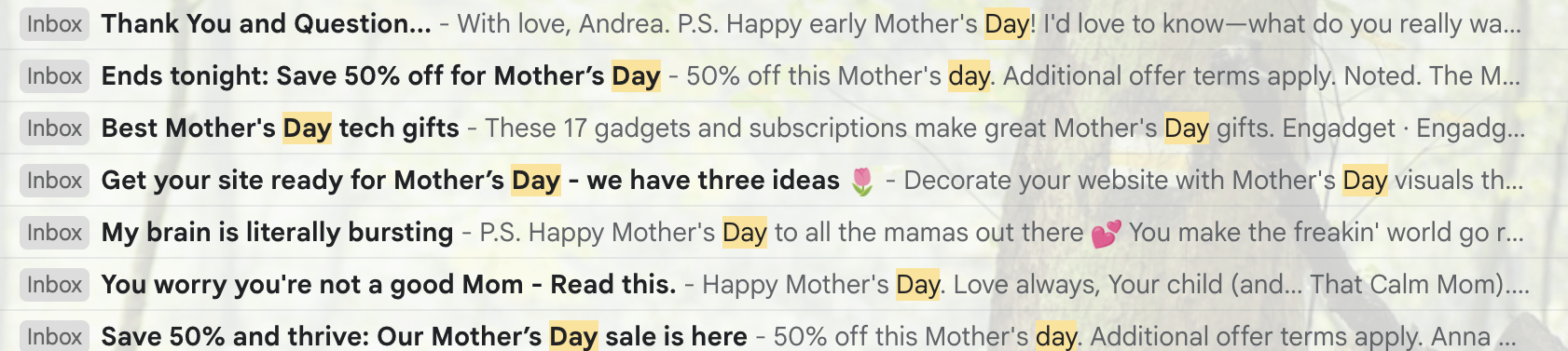
Emails that mentioned Mother’s Day: 9. That’s just 18% of the total emails sent during the weekend.
The brands that did show up sent emails that included:
• A Mother’s Day Flash Sale
• Emotional resonance around being a good mom
• Mother’s Day gift roundups
• Personal notes and themed content
• Acknowledging gift pressure
The rest?
Ignored the occasion entirely, even brands that talk about personal growth, emotions, family, or mindset.
Most People Miss the Boat
Using contextual marketing in your strategy isn’t about forcing a connection with every holiday or cultural event.
It’s about asking:
Is my audience thinking about this right now? And can I meet them there in a meaningful way?
Days like Mother’s Day, New Year’s, Valentine’s Day, and even back to school season stir strong emotions. Use those emotions to build connection, not just sell. So Mother’s Day is a chance to do more than just launch a flash sale. Your emails could educate, connect or inspire with themes such as:
• Talk about boundaries
• Celebrate caregivers
• Offer healing content
• Share personal stories
• Reframe productivity and worth
Instead, 80% of brands treated the weekend like any other.
And they missed the opportunity to build connection and drive action.
So in conclusion…
49 emails hit my inbox during Mother’s Day weekend. Only 9 mentioned it. Most marketers missed an easy chance to be timely, relevant, and emotionally resonant. Of course your inbox might look different, but what I’m trying to say is that…
Contextual marketing works – and it makes writing powerful emails or relevant promos so much easier.
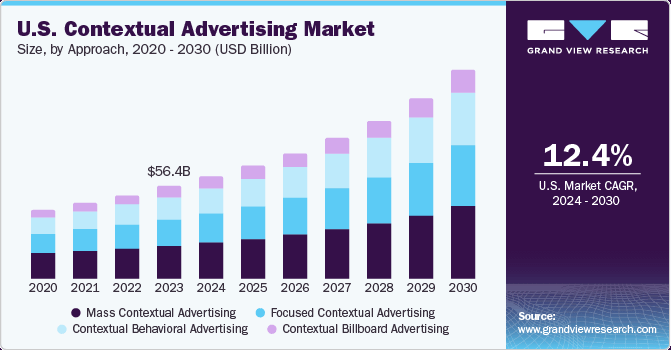
But it takes planning, empathy, and the willingness to pause the funnel.
So if you’re writing your next newsletter or launch sequence…